
Introduction
If you’ve ever read a company’s financial report or listened to an investor presentation, you may have come across the term ltm meaning finance and wondered what it really means. At first glance, it might sound like complex Wall Street jargon, but the concept behind it is surprisingly straightforward—and incredibly important.
In the world of financial analysis, numbers rarely tell the full story unless they reflect the most recent performance of a business. That’s exactly where ltm meaning finance becomes valuable. It refers to the “Last Twelve Months,” a metric analysts use to evaluate a company’s financial health based on its most recent 12-month performance.
Imagine trying to judge a company using only last year’s annual report—even though the business may have changed dramatically since then. Markets move quickly, industries evolve, and companies launch new strategies all the time. Investors therefore rely on LTM calculations to get a clearer, real-time picture of performance.
Understanding ltm meaning finance can help investors, entrepreneurs, and even students interpret financial statements more accurately. Whether you’re analyzing revenue growth, EBITDA margins, or company valuation, the LTM metric is often the key to making better financial decisions.

What Is LTM Meaning in Finance
The phrase ltm meaning finance refers to the financial performance of a company during the last twelve months, regardless of when the fiscal year begins or ends.
Instead of relying solely on a company’s annual financial report, analysts calculate LTM values by combining data from the most recent four quarters.
For example:
If a company releases its quarterly reports:
- Q3 2024
- Q4 2024
- Q1 2025
- Q2 2025
The LTM period would include those four quarters together.
In simple terms:
LTM = Financial results from the most recent 12 months
This allows investors to see current performance, not outdated historical numbers.
Key Financial Metrics Often Calculated Using LTM
Common financial metrics using LTM include:
- LTM revenue
- LTM EBITDA
- LTM operating income
- LTM net profit
- LTM free cash flow
- LTM earnings per share
These figures help analysts evaluate how a company has performed recently.
Why Last Twelve Months Metrics Matter
Understanding ltm meaning finance is essential because businesses evolve constantly. A company that performed poorly last year might be thriving today.
LTM solves this problem by providing up-to-date financial insights.
1. Reflects Current Business Performance
Annual reports may include outdated data.
LTM numbers provide a rolling performance measurement.
2. Helps Investors Compare Companies
Companies have different fiscal year endings.
Using LTM allows analysts to compare firms fairly.
3. Improves Valuation Accuracy
Valuation models such as:
- EV/EBITDA
- Price-to-earnings ratio
- Price-to-sales ratio
often rely on LTM metrics.
4. Captures Seasonal Business Trends
Some industries are highly seasonal:
Examples include:
- retail
- tourism
- agriculture
- technology product launches
LTM helps smooth out seasonal fluctuations.

How LTM Is Calculated
Calculating ltm meaning finance is straightforward once you understand the formula.
Basic LTM Formula
LTM can be calculated as:
LTM = Latest Annual Financial Data + Current YTD − Previous YTD
Another common approach:
LTM = Sum of last four quarters
Example Calculation
| Quarter | Revenue |
|---|---|
| Q3 2024 | $2M |
| Q4 2024 | $3M |
| Q1 2025 | $2.5M |
| Q2 2025 | $3.5M |
LTM Revenue = $11M
This reflects the company’s latest annual performance.
LTM vs Fiscal Year Data
| Metric | Definition |
|---|---|
| Fiscal Year | Performance during official accounting year |
| LTM | Performance during most recent 12 months |
LTM therefore provides more relevant financial insight.
LTM Revenue vs Annual Revenue
Understanding the difference between annual and LTM revenue is critical.
Annual Revenue
Annual revenue represents income generated during a company’s fiscal year.
For example:
Fiscal Year: January–December 2024.
LTM Revenue
LTM revenue represents the most recent twelve months, even if it spans two fiscal years.
Example:
April 2024 – March 2025.
Comparison Table
| Metric | Advantage | Limitation |
|---|---|---|
| Annual Revenue | Official accounting record | May be outdated |
| LTM Revenue | Reflects current business trends | Requires recalculation |
Because markets evolve quickly, investors often prefer LTM data.
LTM EBITDA and Profitability Analysis
One of the most common applications of ltm meaning finance is measuring EBITDA.
EBITDA stands for:
Earnings Before Interest, Taxes, Depreciation, and Amortization
Why LTM EBITDA Matters
Companies use LTM EBITDA to:
- assess operating profitability
- compare performance with competitors
- support valuation models
- measure financial efficiency
Example
If a company reports:
| Quarter | EBITDA |
|---|---|
| Q3 | $500K |
| Q4 | $650K |
| Q1 | $550K |
| Q2 | $700K |
LTM EBITDA = $2.4M
This metric helps investors understand operational performance.
LTM in Company Valuation
Valuation models heavily rely on LTM financial metrics.
Investors often calculate:
EV / LTM EBITDA
Enterprise Value divided by LTM EBITDA.
Example:
| Metric | Value |
|---|---|
| Enterprise Value | $100M |
| LTM EBITDA | $10M |
| EV/EBITDA | 10x |
Price / LTM Earnings
Used in stock market valuation.
Price / LTM Revenue
Common for high-growth startups.
These ratios help investors determine whether a company is:
- undervalued
- fairly priced
- overvalued
Real-World Examples of LTM in Finance
Let’s consider a real-life scenario.
Imagine a tech startup that experienced rapid growth.
Fiscal Year Revenue
2024: $20M
Recent Quarters
| Quarter | Revenue |
|---|---|
| Q1 2025 | $7M |
| Q2 2025 | $8M |
If investors relied only on 2024 numbers, they would miss the growth trend.
However, using LTM revenue, analysts would see:
- Q3 2024
- Q4 2024
- Q1 2025
- Q2 2025
This gives a much more accurate picture.
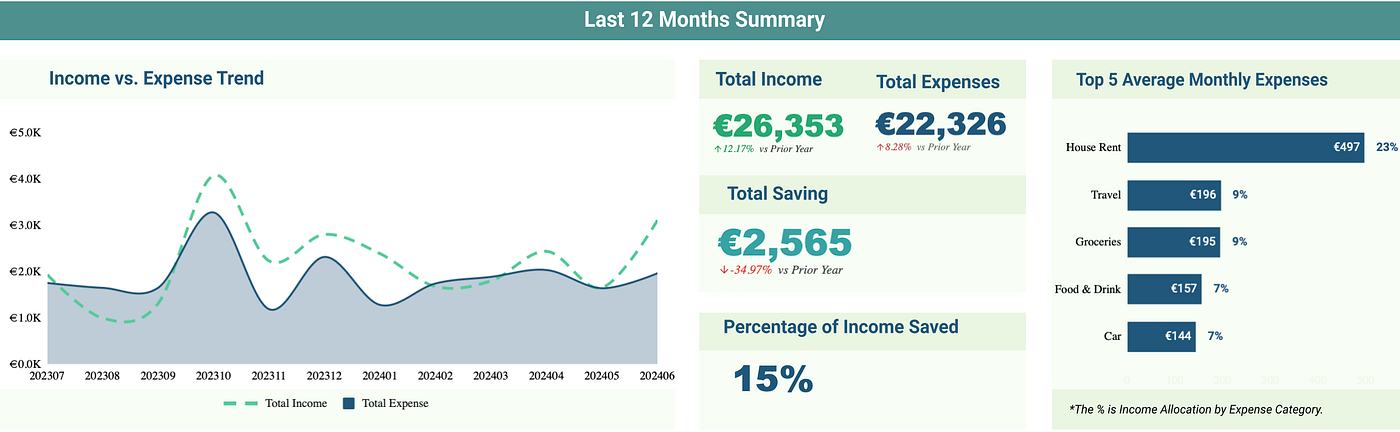
Advantages and Limitations of LTM Metrics
Understanding ltm meaning finance also requires recognizing its strengths and weaknesses.
Advantages
• Provides up-to-date financial performance
• Helps investors analyze current trends
• Allows fair comparison across companies
• Useful for valuation models
Limitations
• Can ignore long-term trends
• May distort performance in cyclical industries
• Requires continuous recalculation
Therefore, analysts usually combine LTM metrics with historical financial data.
How Investors Use LTM in Decision Making
Professional investors rely heavily on LTM metrics when evaluating companies.
Investment Analysis
Investors use LTM data to:
- track revenue growth
- assess profitability
- estimate future performance
Financial Modeling
LTM figures are used in:
- discounted cash flow models
- valuation multiples
- forecasting projections
Mergers and Acquisitions
During acquisitions, buyers evaluate:
- LTM revenue
- LTM EBITDA
- LTM cash flow
These metrics determine company valuation.
Common Mistakes When Interpreting LTM
Even though ltm meaning finance is straightforward, people often misunderstand how to interpret it.
1. Ignoring Seasonal Businesses
Retail companies may show inflated LTM revenue after holiday seasons.
2. Overlooking One-Time Events
A major contract or asset sale can distort LTM performance.
3. Comparing LTM With Fiscal Year Data
This can create misleading comparisons.
4. Ignoring Industry Context
Different industries require different financial benchmarks.
Investors should always analyze LTM metrics alongside broader financial indicators.
FAQ
What does LTM mean in finance?
LTM stands for Last Twelve Months, a financial metric representing a company’s performance over the most recent 12-month period.
Why is LTM important in financial analysis?
LTM provides a more current view of company performance compared with traditional annual financial statements.
How is LTM calculated?
LTM is usually calculated by adding the financial results from the latest four quarters.
What is LTM revenue?
LTM revenue represents the total revenue generated during the most recent twelve months.
Is LTM the same as trailing twelve months?
Yes. LTM and TTM (Trailing Twelve Months) are often used interchangeably in finance.
Do investors prefer LTM data?
Yes. Investors often prefer LTM metrics because they provide a more up-to-date financial picture.
What financial metrics use LTM?
Common metrics include:
- LTM EBITDA
- LTM revenue
- LTM earnings per share
- LTM operating income
Can LTM data be misleading?
Yes. If a company has strong seasonal sales or unusual one-time events, LTM numbers may not reflect long-term performance accurately.
Conclusion
Understanding ltm meaning finance is essential for anyone analyzing business performance, whether you’re an investor, entrepreneur, or finance student. By focusing on the last twelve months of financial activity, LTM metrics provide a clearer and more current picture of how a company is actually performing.
In a fast-moving business world where market conditions change quickly, relying solely on annual financial statements can lead to outdated conclusions. LTM calculations bridge that gap by offering real-time insight into revenue growth, profitability, and operational efficiency.
Ultimately, LTM is not just another financial acronym—it’s a powerful analytical tool. When used alongside traditional financial reports and industry benchmarks, it helps investors make smarter decisions and understand the true financial health of a company.